
ADMIRALTY IN REM – WRONGFUL ARREST – POSSESORY RIGHT – ARREST GONE WRONG: WHEN A SHIP ARREST BACKFIRES WITH DAMAGES
In Eletson Holdings Inc & Ors v The Vessel “Paros” [2026] 8 MLJ 80, the High Court set aside an arrest after finding that the plaintiffs had no proprietary or possessory right to the vessel at the time of the writ, as the bareboat charter had already been terminated. The Court held that the claim was in substance a corporate control dispute dressed up as an admiralty action, and emphasised that such disputes do not fall within admiralty jurisdiction. Critically, the plaintiffs’ failure to disclose the termination of the charter when obtaining the arrest warrant amounted to a serious breach, leading the Court to find mala fides or gross negligence and order damages for wrongful arrest. The decision reinforces that ship arrest is a powerful remedy that must be exercised with full disclosure and a proper maritime foundation.
MARITIME LAW – LIEN, LOSS AND LMAA: ENGLISH COMMERCIAL COURT ORDERS SALE OF DETERIORATING CARGO
In Lord Marine Co Ltd v Vimeksim Trans SA & Anor [2025] 2 Lloyd’s Rep 52, the English Commercial Court exercised its powers under s.44 Arbitration Act 1996 to order the sale of a deteriorating cargo of Ukrainian corn over which the shipowners had exercised a lien for unpaid freight. Mr Justice Bryan held that the cargo was the “subject of the proceedings” and that the court could intervene to preserve its value pending LMAA arbitration. The decision clarifies that a “freight prepaid” stamp does not estop owners where freight has not actually been paid and the bills of lading never left owners’ possession, and that possession can be maintained even when the cargo is stored in a receivers’ warehouse. This case reinforces the court’s readiness to act swiftly to prevent the loss of value in perishable cargo while safeguarding parties through fortified undertakings in damages.
ADMIRALTY IN REM – NO RIGHT TO ARREST: MALAYSIAN COURT BLOCKS ABUSE OF ADMIRALTY LAW OVER U.S. SANCTIONS
In Unicious Energy Pte Ltd v The Owners of the ‘Alpine Mathilde’ [2023] MLJU 2819, the High Court set aside a vessel arrest brought solely to secure arbitration claims, holding it was an abuse of admiralty jurisdiction. The Plaintiff, an OFAC-designated SDN, had no valid claim due to U.S. sanctions, and the Court ruled that arrest for arbitration must strictly comply with section 11(1)(c) of the Arbitration Act 2005. This case reinforces the limits of in rem jurisdiction and the enforceability of sanctions clauses in cross-border charterparty disputes.
SHIPPING – ADMIRALTY IN REM – ANCHORED BUT NOT ADRIFT: REDEFINING “SHIP” IN ADMIRALTY JURISDICTION
The Singapore High Court in Vallianz Shipbuilding & Engineering v Owner of the Vessel ‘Eco Spark’ [2025] 1 Lloyd’s Rep 195 clarified the definition of a ‘ship’ under admiralty jurisdiction. Despite conversion into a stationary floating fish farm, the vessel retained its status as a ship due to its inherent navigational capability, significantly broadening the scope of admiralty law.
NAVIGATION AND SHIPPING LAW – COLLISION REGULATIONS – COLLISION AT SEA – A WAKE-UP CALL FOR ADHERING TO NAVIGATION RULES
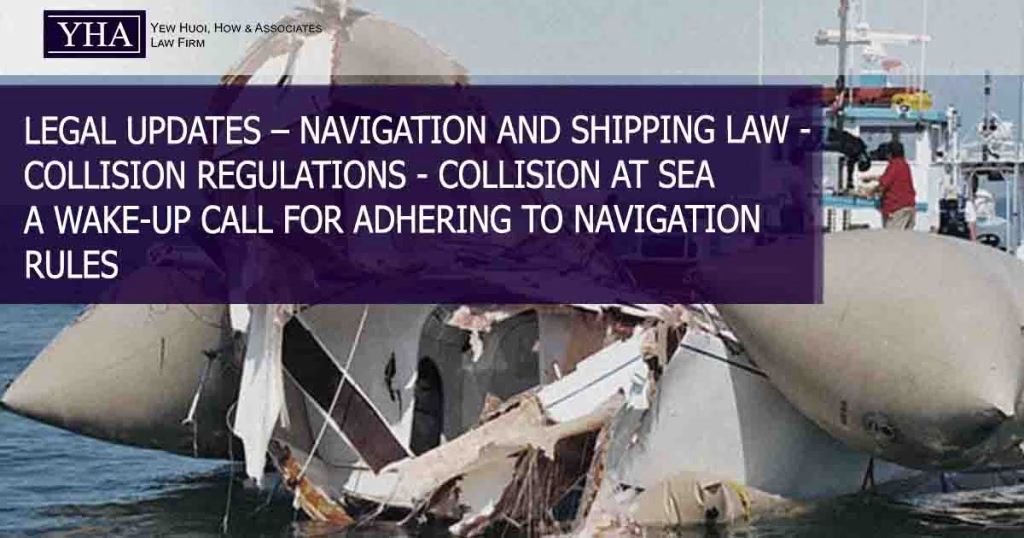
The collision between the FMG Sydney and MSC Apollo highlights the critical importance of adhering to established navigation rules. Deviations, delayed actions, and reliance on radio communications instead of clear, early maneuvers can lead to disastrous outcomes. This case serves as a stark reminder for mariners: follow the rules, act decisively, and prioritize safety above assumptions.
SHIPPING AND ADMIRALTY IN REM – A SINKING ASSET – COURT ORDERS SALE OF ARRESTED VESSEL TO PRESERVE CLAIM SECURITY
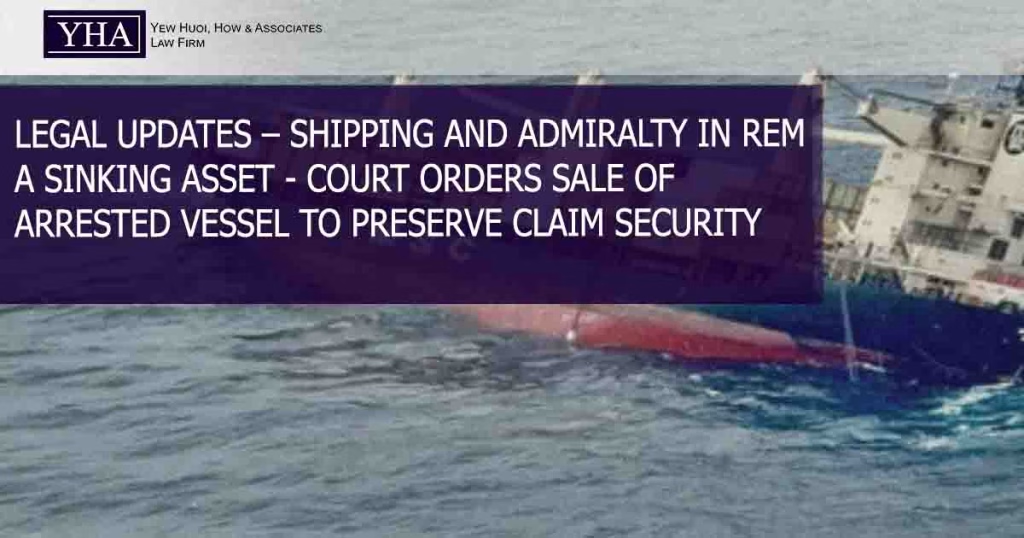
In a landmark admiralty decision, the High Court ordered the pendente lite sale of the arrested vessel Shi Pu 1, emphasizing the principle of preserving claim security over the defendant’s financial incapacity. The court ruled that the vessel, deemed a “wasting asset,” could not remain under arrest indefinitely without proper maintenance or security. This case reinforces the necessity for shipowners to manage arrested assets proactively to prevent significant financial and legal repercussions.
CHARTERPARTY – LIEN ON SUB-FREIGHTS: CLARIFYING OWNERS’ RIGHTS AGAINST SUB-CHARTERERS
In Marchand Navigation Co v Olam Global Agri Pte Ltd and Anor [2025] 1 Lloyd’s Rep 92, the Singapore High Court upheld the owners’ right to enforce a lien on sub-freights under Clause 18 of the NYPE 1946 charterparty, ruling that the phrase ‘any amounts due under this charter’ was broad enough to cover unpaid bunker costs. Despite an arbitration clause between the owners and charterers, the sub-charterer was obligated to honor the lien, as it was not a party to the arbitration agreement. This decision reinforces that a properly exercised lien on sub-freights can be an effective tool for owners to recover unpaid sums, even in the presence of disputes between charterers and sub-charterers.
SHIP SALE – LOSING THE DEAL, LOSING THE DAMAGES? THE LILA LISBON CASE AND THE LIMITS OF MARKET LOSS RECOVERY
In “The Lila Lisbon” [2025] 1 Lloyd’s Rep 101, the court ruled that a buyer cancelling under Clause 14 of the Norwegian Salesform Memorandum of Agreement is not automatically entitled to loss of bargain damages unless the seller is in repudiatory breach. The case clarifies that failing to deliver by the cancellation date does not constitute non-delivery under the English Sale of Goods Act 1979, as the clause grants the buyer a discretionary right rather than imposing a firm obligation on the seller. This decision highlights the importance of precise contract drafting, particularly in ship sale agreements, where buyers must ensure that compensation for market loss is explicitly provided for.
NAVIGATION AND SHIPPING LAW – COLLISION REGULATIONS – COLLISION AT SEA – A WAKE-UP CALL FOR ADHERING TO NAVIGATION RULES
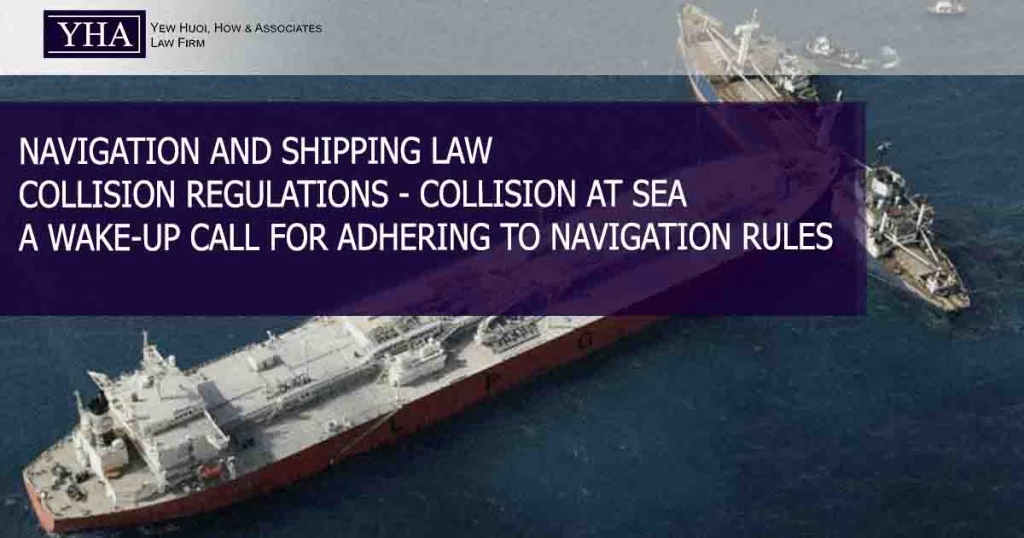
The collision between the FMG Sydney and MSC Apollo highlights the critical importance of adhering to established navigation rules. Deviations, delayed actions, and reliance on radio communications instead of clear, early maneuvers can lead to disastrous outcomes. This case serves as a stark reminder for mariners: follow the rules, act decisively, and prioritize safety above assumptions.
SHIPPING AND ADMIRALTY IN REM – A SINKING ASSET – COURT ORDERS SALE OF ARRESTED VESSEL TO PRESERVE CLAIM SECURITY
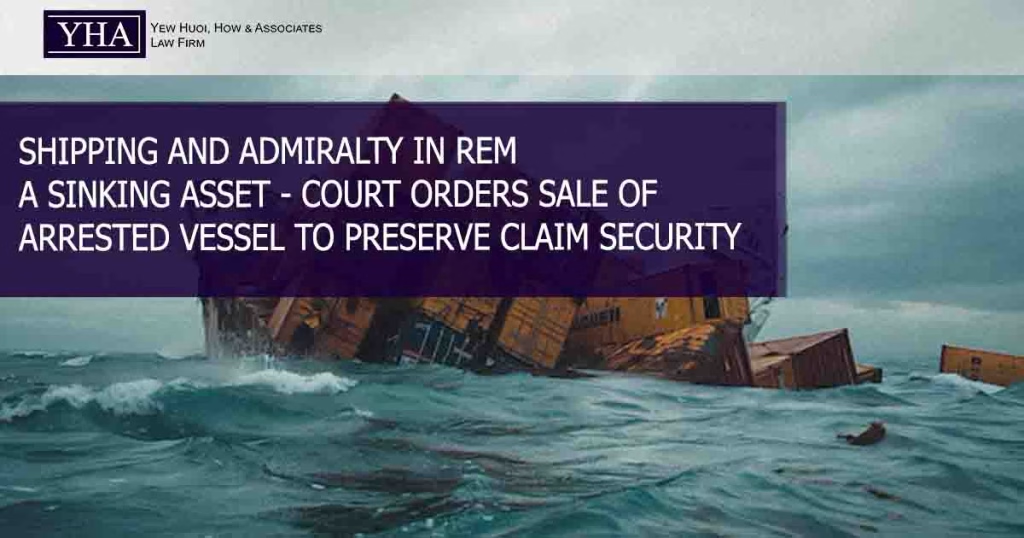
In a landmark admiralty decision, the High Court ordered the pendente lite sale of the arrested vessel Shi Pu 1, emphasizing the principle of preserving claim security over the defendant’s financial incapacity. The court ruled that the vessel, deemed a “wasting asset,” could not remain under arrest indefinitely without proper maintenance or security. This case reinforces the necessity for shipowners to manage arrested assets proactively to prevent significant financial and legal repercussions.
 EN
EN  ZH
ZH  MY
MY